
The Ultimate Glossary of Assam Tea: From Seed to Sip
Welcome to the Assam Tea Glossary by TeaPaat, your definitive guide to the terminology of the world’s most famous tea-growing region. Whether you are a casual sipper, a food blogger, or a dedicated connoisseur, understanding these terms will help you appreciate the rich heritage, dense botany, and complex industrial craftsmanship behind every cup of Assam tea.
1. Agro-Climatic, Botanical & Cultivation Keywords
Before processing begins in the factory, the final quality, yield, and character of Assam tea are determined by the unique terroir and agricultural practices in the fields.
- Camellia sinensis var. assamica: The indigenous, large-leaf tea plant variety native to the Brahmaputra Valley of Assam. It naturally contains higher levels of caffeine, soluble solids, and polyphenols, resulting in a characteristically strong, bold, and robust brew.
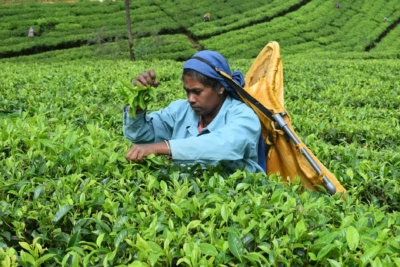
- Two Leaves and a Bud: The gold standard of plucking. This refers to the soft terminal bud and the two youngest leaves. High-quality estates insist on this fine plucking to ensure maximum flavor and antioxidant density.
- Clonal Tea: Tea plants propagated via vegetative cuttings from a single “mother” bush selected for superior traits (such as drought resistance, high yield, or distinct malty flavor), offering genetic consistency across a garden section.
- Jat: A traditional planters’ term referring to the specific breed, variety, or ancestral lineage of the tea seed or plant stock (e.g., Assam Jat, Manipuri Jat, or Burma Jat).
- Terroir: The complete natural environment in which a particular tea is grown, including factors such as the rich alluvial soil of the floodplain, high humidity, intense tropical heat, and heavy monsoon distribution.
- Shade Trees: Specifically selected trees (like Albizia leguminosae) planted systematically throughout tea fields. They shield the assamica bushes from scorching afternoon sun, fix nitrogen into the soil, and regulate local microclimates.
- Pruning: The systematic cutting back of the tea bush during the winter dormant period. This stimulates fresh vegetative growth, maintains a manageable harvesting “plucking table,” and directly influences the yield of the upcoming First Flush.
2. The Art of Manufacture & Factory Process
Assam is home to diverse processing styles. For instance, these range from robust daily brews to delicate artisanal creations. The path from green leaf to dry commodity requires precise biochemical mastery.
- Withering: The first factory stage, in which green leaves are spread over large open or enclosed troughs. Controlled airflow reduces the moisture content by roughly 30% to 40%, making the leaves pliable for rolling without breaking the leaf skin prematurely.
- Maceration: The critical step of physical cellular disruption. By breaking down the inner walls of the leaf, internal juices and enzymes are forced to mix, kicking off the enzymatic oxidation process.
- CTC (Crush, Tear, Curl): This mechanical process is the backbone of the global tea industry. In this method, cylindrical rollers crush withered leaves into small, uniform pellets. Consequently, CTC tea provides a high infusion surface area, creating a strong, malty, deep-red liquor perfect for milk tea and breakfast blends.
- Orthodox Tea: This traditional method requires workers or specialized machinery to roll tea leaves gently. Additionally, because this slow, careful process preserves essential oils and keeps the physical leaf structures intact, it results in a nuanced, highly complex flavor profile.
- Green Tea: Furthermore, unlike Black tea, Green tea is unoxidized. The leaves are heated, pan-fried, or steamed immediately after plucking to kill the internal enzymes and stop the oxidation process, preserving the natural chlorophyll and grassy, earthy flavors.
- Oxidation (Fermentation): The critical chemical stage where polyphenols interact with oxygen under regulated humidity and temperature. This biochemical reaction transforms the green leaf pigments into theaflavins and thearubigins, shifting the flavor from vegetal to deep, bright, and coppery.
- Firing (Drying): Passing the oxidized tea through hot air dryers (typically at 80°C to 90°C). This halts enzyme activity, stops oxidation instantly, and lowers residual moisture to around 3% to 5% to make the product shelf-stable.
- Fluidized Bed Dryer (FBD): A high-efficiency, modern factory dryer that suspends tea leaves on an upward cushion of hot air during the firing stage, ensuring uniform heat exposure and minimizing the risk of scorching.
3. Seasons, Harvesting & Timing
In Assam, timing dictates character. The physical makeup and flavor compounds of the “Two Leaves and a Bud” alter dramatically as the year progresses.
- First Flush: Initially, the First Flush marks the awakening of the spring. Harvested in March after the winter dormancy, these teas are surprisingly light, floral, and brisk. It offers a refreshing departure from the heavy body typically associated with the region.
- Second Flush: Following this, the Second Flush, often called the ‘Champagne of Assam,’ arrives. Harvested in peak summer (May and June), this is the crown jewel of the season. These teas are world-renowned for their incredible, heavy “malty” character and high-density “tippy” appearance.
- Monsoon Flush: Collected during the heavy rainy season from July to September. Due to rapid growth from constant rain, these teas are highly productive but yield a flatter, muddy, and less nuanced liquor, often utilized for industrial blending.
- Autumn Flush: Harvested in the final cooler months of the year before the tea bushes enter winter dormancy. These teas offer a deep, coppery liquor and a smooth, mellow, sweet flavor that is highly underrated by collectors.
4. Tea Grading and Trade Classification
After firing, dried tea leaves are mechanically sorted via vibrating mesh sieves and classified into distinct commercial grades based strictly on physical particle size.
Orthodox Leaf Grades (Whole & Broken)
- FTGFOP (Fine Tippy Golden Flowery Orange Pekoe): The highest tier of whole-leaf orthodox Assam tea, boasting an exceptionally high percentage of golden tips.
- TGFOP (Tippy Golden Flowery Orange Pekoe): Premium whole-leaf tea with a noticeable presence of golden buds.
- BOP (Broken Orange Pekoe): The standard classification for leaves broken or cut during processing, offering a faster infusion and a punchier liquor than whole-leaf counterparts.
- FBOP (Flowery Broken Orange Pekoe): Broken leaf segments that still contain a prominent presence of attractive golden tips, delivering a balance of strength and sweetness.
CTC Leaf Grades (Granules & Particles)
- BP (Broken Pekoe): Large, round, clean CTC pellets that yield a full-bodied but slightly smoother, well-rounded brew.
- BOPL (Broken Orange Pekoe Large): The largest cut of CTC granules, offering a slightly slower extraction rate.
- BOPSM (Broken Orange Pekoe Small Mil): Medium-sized CTC granules, heavily favored for everyday bold breakfast blends because they balance quick brewing with intense color.
- Fannings (e.g., PF / Pekoe Fannings): Small leaf particles left over from the sorting process that infuse almost instantly—the structural standard for commercial paper tea bags.
- Dust (e.g., PD / Pekoe Dust): The smallest, finest particle size available. It produces an incredibly dark, highly astringent, and instantaneous liquor preferred for traditional street-side Chai stalls and strong milk-boiled recipes.
5. Professional Quality, Chemistry & Tasting Terms
When we evaluate the heritage of an estate, check factory batches, or taste a sample for global auction houses, we look for these specific chemical and sensory indicators in the cup.
- Malty: The signature flavor note of world-class Assam black tea. It describes a thick, sweet, grain-like, or fresh-baked biscuit taste that coats the palate. If a tea isn’t malty, can you even call it Assam Tea?
- Tippy / Golden Tips: When you see golden flecks in your dry tea, you are looking at “Tips”, the unopened tender buds. These tips contain minimal chlorophyll and do not turn black during factory oxidation; instead, they take on a striking golden hue and impart a velvety, honey-like sweetness to the brew.
- Briskness: A lively, mouth-drying quality driven by fresh tannins. It makes a tea feel “energetic,” crisp, and refreshing on the sides of the tongue rather than flat or stale.
- Pungent: An intense, highly desirable combination of heavy briskness, deep color, and strong body; a key quality marker for top-tier North Indian black teas.
- Theaflavins (TFs): Brilliant orange-yellow antioxidant compounds formed during leaf oxidation. They are chemically responsible for giving premium Assam liquor its bright, golden ring around the cup and its signature crisp briskness.
- Thearubigins (TRs): Deeper, red-brown chemical compounds formed during extended oxidation. They provide the deep color, structural body, and underlying strength of the liquor.
- Creaming Down: A natural phenomenon where a high-quality cup of Assam turns cloudy or milky as it cools down naturally. This is a visual indicator of high soluble solids, specifically a healthy concentration of caffeine and theaflavins precipitating out of the liquid.
- Bakey / Burnt: A major manufacturing defect describing an unpleasantly dry, flat, or smoky taint in the liquor, caused by over-firing the tea leaves inside the factory dryers at extreme temperatures.
6. Cultural, Historical & Heritage Terms
The story of Assam tea is deeply woven into the history, labor movements, and unique daily lifestyle of the region.
- Bagan Time (Tea Garden Time): Interestingly, a colonial-era tradition where tea estates set their local clocks exactly one hour ahead of Indian Standard Time (IST). This practice allows gardens to make the most of the early sunrise in Northeast India and maximize daytime field labor.
- Maniram Dewan: The first native Indian tea planter and a prominent martyr of the 1857 freedom struggle. His legacy is the foundation of the indigenous, independent tea industry in Assam.
- Maach (Invoicing): The specific identification batch mark, serial number, and estate tracking code stamped onto bulk tea chests before they depart the factory for regional auction hubs like the Guwahati Tea Auction Centre (GTAC).
- Adivasi / Tea Garden Community: The dedicated community of ancestral tea garden workers who were originally brought to Assam during the 19th century. Their deep agricultural expertise in manual plucking and field cultivation forms the human backbone of the entire industry.
We hope this Assam Tea Glossary helps you choose your next favorite brew. Keep this page bookmarked as a reference for all things relating to the manufacturing, grading, chemistry, and rich history of the Assam tea industry.